FUJI Pushes the Boundaries of SMT Placement for AI Servers and Data Centers
Automated Placement of Components Weighing Up to 2 kg – Successful Evaluation with Broadcom Tomahawk 6
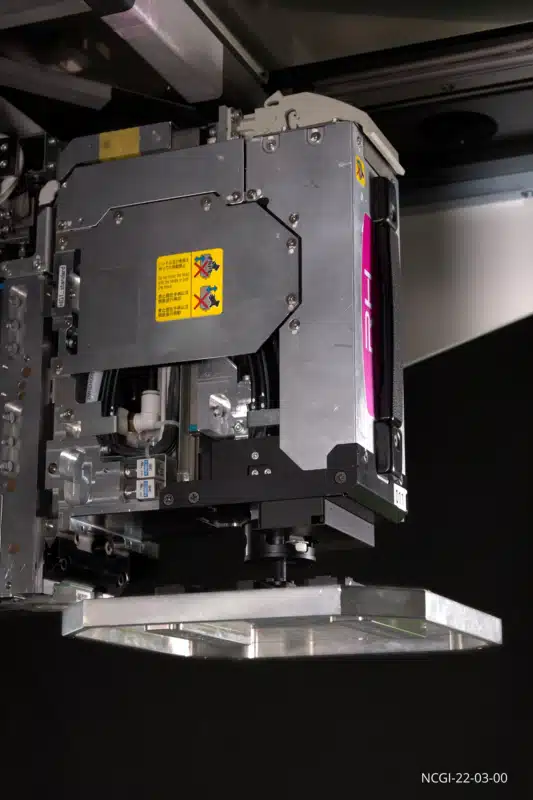
Kelsterbach, October 19th, 2026 – Increasingly powerful AI servers and data centres require ever larger and heavier semiconductor components. FUJI has further developed its SMT placement technology to meet these requirements: in their standard configurations, the NXTR and AIMEXR placement machines can handle components measuring up to 200 × 200 mm and weighing 2.0 kg. A joint evaluation with Broadcom and Celestica provides a concrete example of the placement of such components. According to FUJI, the company was the first manufacturer to successfully place Broadcom’s Tomahawk 6 – Davisson Ethernet switch, weighing approximately 1.3 kg, using an SMT placement machine.
The growing adoption of generative AI is driving the development of more powerful server and data centre technologies. To deliver the required computing power, increasingly sophisticated semiconductor packages combine components such as graphics processing units (GPUs), application-specific integrated circuits (ASICs) and High Bandwidth Memory (HBM). This also changes the requirements for processing these components in electronics manufacturing: components are becoming larger and heavier while still requiring precise placement on printed circuit boards.
New technologies such as Co-Packaged Optics (CPO) are also gaining importance. CPO integrates semiconductors and optical communication components into a single package. This technology enables high-density optical interfaces and helps increase data transmission performance while reducing power losses during signal transmission. CPO is becoming increasingly important, particularly for connecting large data centres with numerous GPUs and AI accelerators.
Successful Placement of a CPO Ethernet Switch
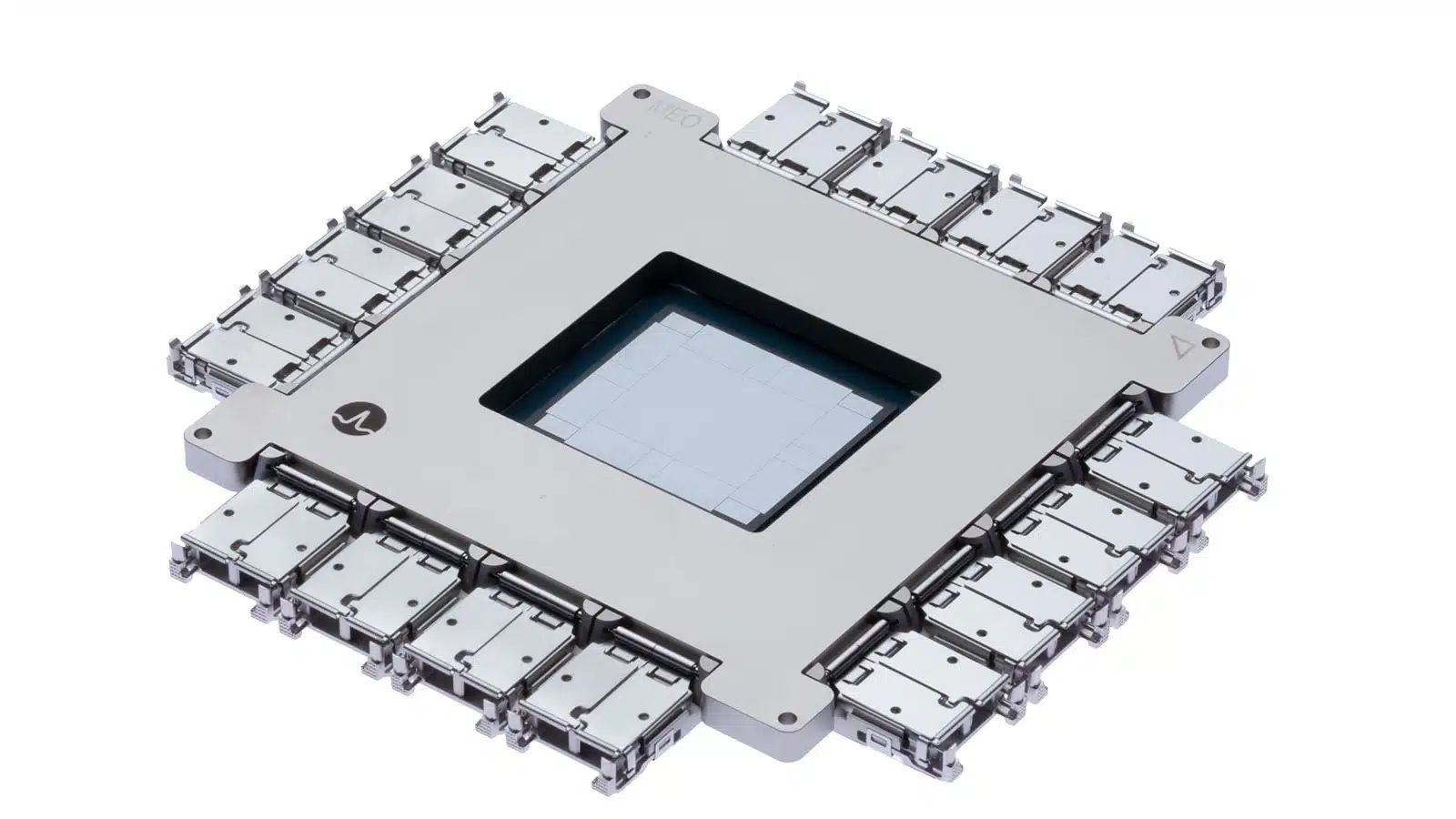
FUJI has investigated how such components can be processed automatically in collaboration with semiconductor manufacturer Broadcom and electronics manufacturing company Celestica. The focus was on Broadcom’s Tomahawk 6 – Davisson, a next-generation Ethernet switch based on Co-Packaged Optics. It integrates a switch ASIC and optical modules into a single package and is designed for high-performance, energy-efficient networks in AI data centres.
For the evaluation, the component weighing approximately 1.3 kg was processed on a FUJI NXTR placement machine. Both component handling and placement accuracy were successfully demonstrated. According to FUJI’s own research, this represents the first successful SMT placement of Broadcom’s Tomahawk 6 – Davisson worldwide.
The AIMEXR, which FUJI offers for the placement of components on large-format printed circuit boards, also has the necessary technical capabilities. Its suitability for placing the Tomahawk 6 – Davisson has been confirmed based on the machine design and technical specifications.
Components Measuring Up to 200 × 200 mm and Weighing 2 kg in Standard Configuration
In addition to the successful evaluation with Broadcom, FUJI has overcome another technological placement limitation. Under its own evaluation conditions, FUJI has demonstrated that components measuring 200 × 200 mm and weighing 2.0 kg can be placed using NXTR and AIMEXR machines in their standard configurations. According to its own research, FUJI is the first manufacturer to have achieved this.
Zero Placement Limits: Systematically Pushing the Boundaries of Placement
These developments are part of FUJI’s “Zero Placement Limits” concept. The objective is to systematically reduce technical limitations in automated SMT placement in all directions and continuously expand the range of components that can be processed. This ranges from the smallest 016008 micro components to large and heavy components, as well as components with heights of up to 50 mm at present.
FUJI aims to enable the automated placement of even those components that have previously pushed conventional SMT processes to their limits. By continuously advancing its placement technologies, FUJI intends to support the automated processing of future generations of larger and heavier semiconductor packages. In doing so, the company is responding in particular to technological developments in AI servers and data centres, which require increasingly powerful and complex components.