Osnitron GmbH opts for AIMEXIIIc placement machine from FUJI
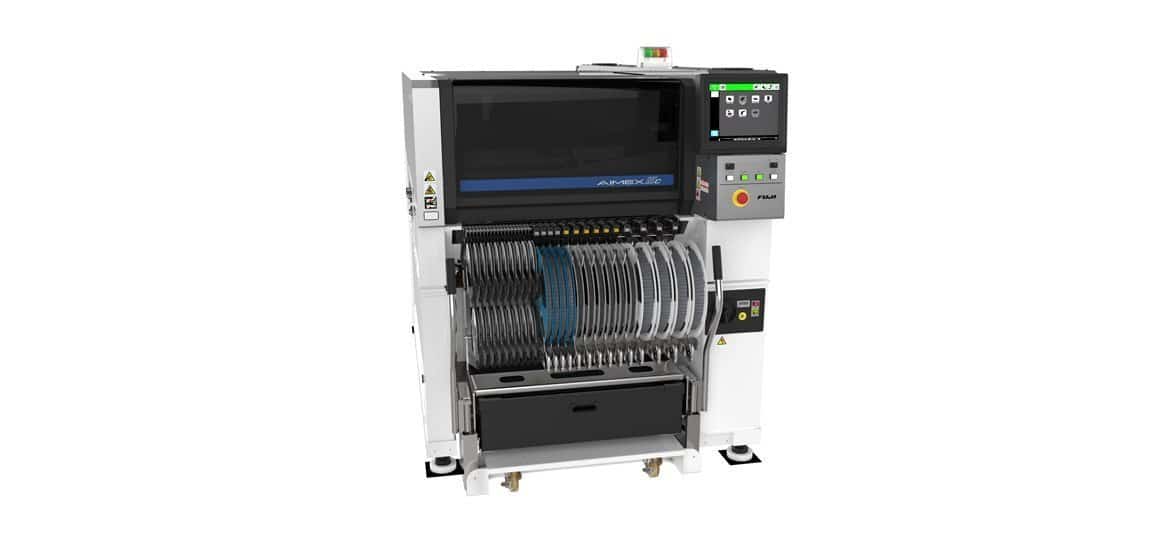
AIMEXIIIc

Electronics service provider sets on advantages such as placement of a large number of parts with a single head

Kelsterbach, November 30, 2021 – Die FUJI EUROPE CORPORATION GmbH (www.fuji-euro.de), specialist for electronic placement machines, sums up its trade show appearance at “productronica 2021” positively. Despite significantly lower visitor numbers, participation was worthwhile for the company. Among other things, FUJI was able to sign a new contract at the trade show: Osnitron GmbH, an electronics service provider, has chosen the AIMEXIIIc pick-and-place machine with a Single Robot DX head. One advantage: placement of a large number of parts is thus possible with a single head.

“Compared to our participation at productronica 2019, the number of visitors at our booth decreased by approximately 41 percent. This is due to the significantly lower visitor numbers overall. Nevertheless, based on an first interim evaluation, it looks as if this will not have a major impact on the number of resulting projects,” explains Stefan Janssen, member of the management board of FUJI EUROPE CORPORATION GmbH.

Osnitron GmbH, for example, made its decision for the AIMEXIIIc with a Single Robot DX head at the trade show. The company has been a FUJI customer since 2013 and so far owned an AIMEX pick-and-place machine. With the use of the new AIMEXIIIc pick-and-place machine, Osnitron is expanding its scope of action.

Flexible adjustment options for the placement heads during production

One of the company’s specialties is the manual placement of printed circuit boards. “In the electronics industry, there is a constant need to meet the growing demands in terms of increasing variance, batch size 1 and much more. The expandable AIMEXIIIc supports flexible production with a variable mix of high placement performance and versatile product mix with small batch sizes,” explains Mario Petrosevec, Managing Director of Osnitron GmbH.

The Single-Robot DX head used enables the placement of a wide range of parts with a single head, such as parts as small as 0.3 x 0.15 mm, BGAs, large connectors and 5G sub-boards. This is possible because the head can automatically switch between different types of mini turrets during placement. The head can apply a maximum pressure of 98 Newtons and optionally set glue dots. Various configurations of single or dual lane transport as well as with single or double robot are available.

“With the use of the new machine, we have a high degree of flexibility for the increasingly complex and variant requirements in our industry,” explains Mario Petrosevec.
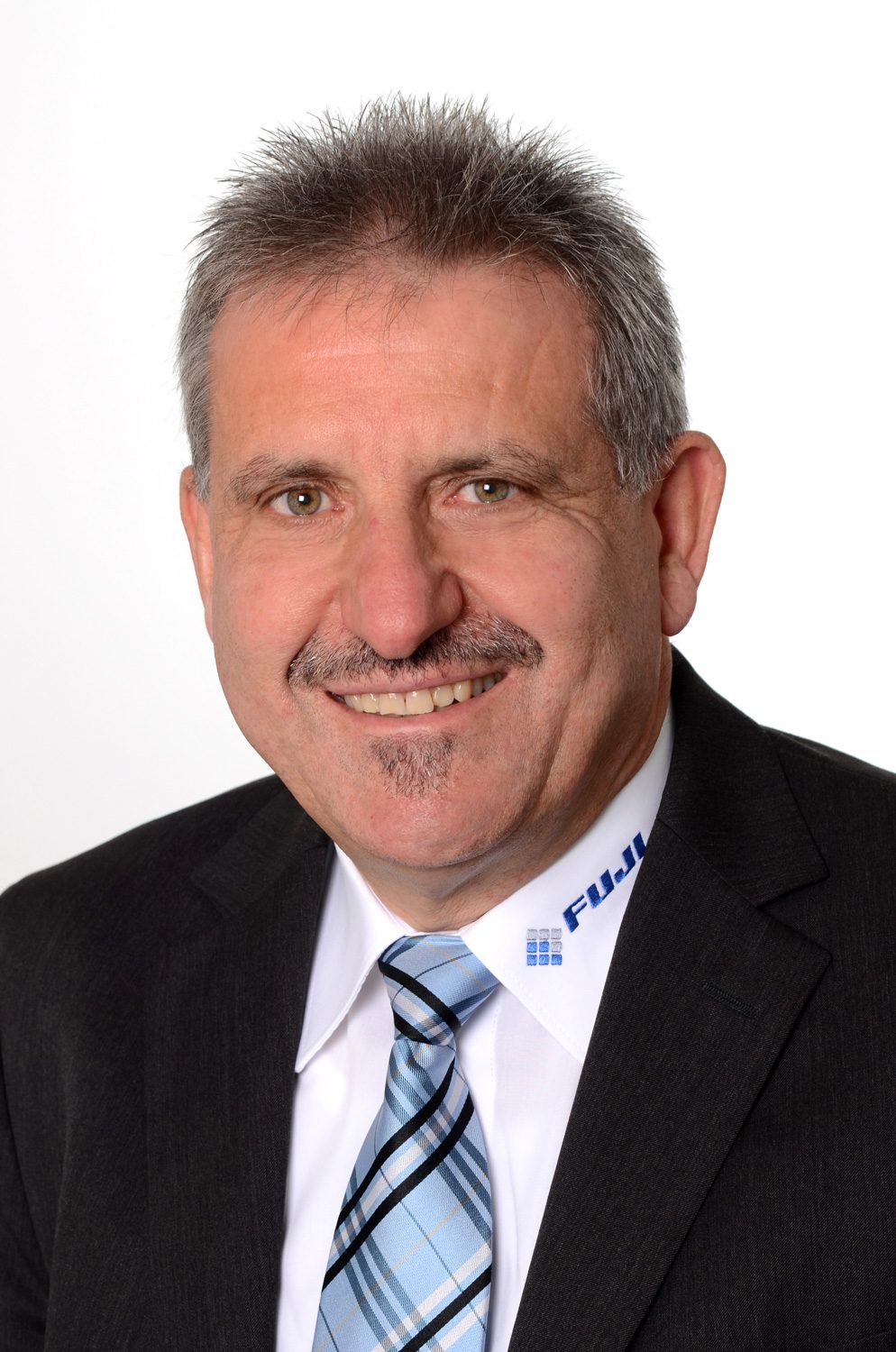
Interview with Klaus Gross: “30 years of FUJI – man of the first hour”

Klaus Gross, Managing Director FUJI EUROPE CORPORATION GmbH

You have been part of FUJI EUROPE CORPORATION since 1992 and are today Managing Director. In which position did you start back then?

At the time, I started at FUJI as a sales engineer for the sales region North Germany. In 1992, we were only eight employees, including two sales people for the German-speaking countries (DACH). I switched as an enthusiastic customer from FUJI to FUJI at that time and still live the enthusiasm today – 30 years later in a team that has increased more than ten times.

Would you have guessed then that you would still be working for the company almost 30 years later?

No, when I joined FUJI at the age of 33, I could not have foreseen that I would be standing here today. I had no concrete perspective in mind and was striving for enjoyment at work and success. I had the ambition then, as I do now, to perform the tasks assigned to me to the best of my ability. This ambition has never changed.

If you look at the market: What was different back then? What has changed until today?

In a working day without Internet, e-mail, smartphone and navigation system, the cycle rhythm was considerably lower than in a working environment permeated by digitalization, as we have today. Certainly, digitization has great advantages and also brings efficiency benefits, etc., but in the analog age, things were more communicative in part because a different form of exchange was required.

Overall, business back then was based more on trust and was more humane in that there was no need for long contracts, contractual penalties, NDA’s and calculations that had to be coherent after the third decimal place. Comparatively, the returns were higher.

And what has changed in the company since then?

Looking at our company, a small team of friends without a fixed organizational structure grew into a globally active successful company. The workforce and turnover have increased more than ten times. Today we have more than 90 employees. Short communication channels have turned into fast and effective communication, which has become even more digital since the Corona pandemic. And our organizational structure has evolved over the years into clear processes. We lived flat hierarchies then as we do now.

While we were under Japanese management for the first 20 years – and at this point I would like to praise the Japanese work culture “it is hard, intense, but fair” – we now operate under German management for 10 years.

What do you see as the recipe for success for FUJI, celebrating its 30th anniversary today?

There are many aspects that define the FUJI success story. These include continuous improvement processes – for example in terms of quality, effectiveness and precision. Here, we are living a very high standard since the very beginning. Also, the constant adaptation to current market needs and technological developments provides us today with stable and continuous growth as well as our strong market position. In addition, the above-average customer orientation and equality of all customers – regardless of size and sales – ensure extremely high customer satisfaction.

What fascinated you most about your work over the nearly 30 years?

My roots are in the field of technology, which has always fascinated me – and still does today as a managing director. In our industry, you always have your pulse on the latest developments. I’m impressed by being able to help shape new technological leaps. I’m also excited by the international nature of the global business model and working with my Japanese colleagues in a diverse and intercultural team.

What do you value most in the company?

On the one hand, our great products make me proud. On the other hand, I especially appreciate the FUJI team, in which all employees contribute to our success – not least through close and uncomplicated communication between all FUJI branches around the world and an appreciative way of dealing with each other. The corporate philosophy in terms of strong customer orientation is also special to me.

30 years of FUJI EUROPE CORPORATION: Klaus Gross, a man of the first hour, gives insights

Klaus Gross, Managing Director FUJI EUROPE CORPORATION GmbH

From 8 employees in 1992 to the Group in 2021: Managing Director helped shape the company for electronic placement machines from the very beginning.

Kelsterbach, November 15, 2021 – FUJI EUROPE CORPORATION GmbH (www.fuji-euro.de), specialist for electronic placement machines, celebrates its 30th anniversary at “productronica 2021”. Klaus Gross has been with the company since 1992. At that time still a sales engineer, today Managing Director of FUJI EUROPE CORPORATION GmbH. The expert provides insights and spans the arc from then to now. The company started with 8 employees. The small team and a company without a fixed organizational structure grew into a globally active supplier of electronic pick-and-place machines. Sales and workforce have increased more than 10 times to now.

“For the first 20 years, FUJI EUROPE CORPORATION GmbH was under Japanese management and embraced the Japanese work culture, which is based on values like intensity and fairness, among others. For the last 10 years, we have been operating under German management, but we still work closely with the team from Japan. I really appreciate the intercultural cooperation,” explains Klaus Gross, Managing Director of FUJI EUROPE CORPORATION GmbH.

Klaus Gross began his career at FUJI EUROPE CORPORATION GmbH as a sales engineer for the North Germany sales region and is now Managing Director. He has helped shape and design technology developments from the very beginning. “My roots are in technology, which has always fascinated me – even now as Managing Director. In our industry, you’re always working on the pulse of time. This requires constant adaptation to current market needs and technological developments. This is how we have been able to grow stably and continuously,” explains the expert.

Business was based more on trust – today more structure and digitization

The company practices flat hierarchies, then as now. The organizational structure has evolved over the years into clear processes. What were once short communication channels have become fast and effective communication, which has become even more digitally determined since the Corona pandemic.

Klaus Gross takes a look back at the time without the Internet, email, smartphones and navigation systems: “In the daily work routine of that time, the cycle rate was considerably lower than in a working environment permeated by digitization, as we find it today. Certainly, digitization has great advantages and also brings efficiency gains, etc., but in the analog age it was more communicative in part because a different form of exchange was required.” The expert continues, “Overall, business back then was based more on trust and was more humane in the sense that there was no need for long contracts, contractual penalties, NDA’s and calculations that had to be coherent after the third decimal. In comparison, the returns were higher.”

Today, FUJI EUROPE CORPORATION covers all areas of modern production – from highly flexible placement systems in high-mix to complete placement lines in high-volume. On the occasion of its 30th anniversary, the company will be presenting solutions for autonomous and flexible production at this year’s “productronica” (in Hall A3 at Stand 317). These are specifically designed to meet the requirements in terms of automation, digitalization and flexibilization of processes in favor of the smart factory.